Amazon AiSL (AI Sign Language)
Making sign-language interpretation available to everyone, everywhere
Extending AiSL from livestream accessibility to Prime Video
I identified an opportunity to extend AiSL, an AI-powered speech-to-sign language concept I originated and led at an Amazon hackathon, from live events to the broader Prime Video experience.
The vision: make sign-language interpretation available as an integrated viewing option across movies and TV shows, giving deaf and hard-of-hearing customers greater access to content without requiring a separately produced sign-language version.
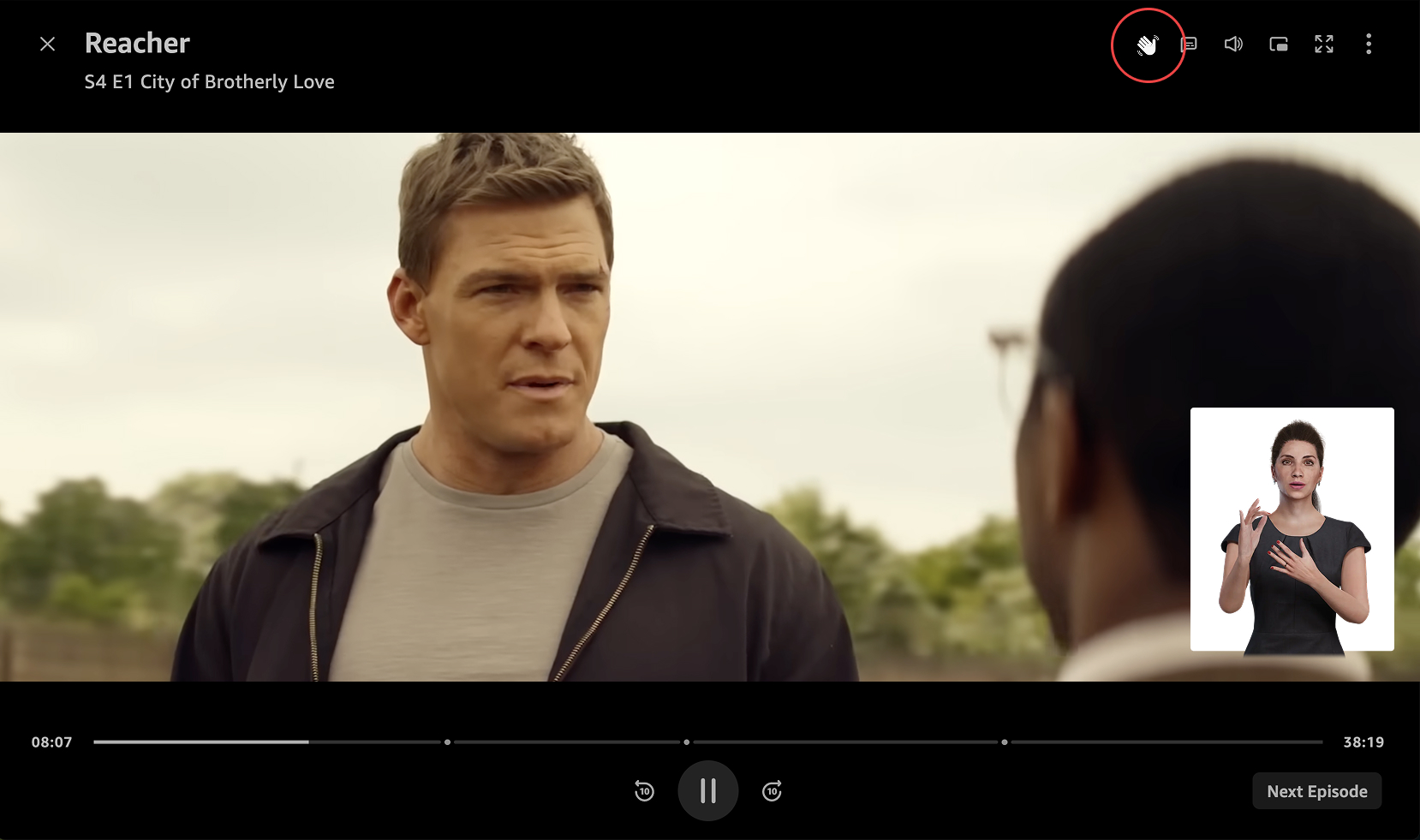
From Livestream to Prime Video
As the lead product designer for Amazon Livestream, I identified a gap in accessibility: only a small number of the 10,000+ annual livestreams offered sign-language interpretation, largely because of the cost and complexity of providing human interpreters.
At an Amazon hackathon, I originated AiSL (AI Sign Language) and led a cross-functional team in prototyping a real-time speech-to-sign experience using lifelike avatars. The goal was to make interpretation scalable enough to support events regardless of size.
That led to a bigger question: what if the same capability could extend beyond live events?
The next opportunity
What if every Prime Video movie and TV show could have sign-language interpretation built into the viewing experience?
Rather than treating accessibility as a separately produced version of content, I explored AiSL as an intelligent layer that could sit directly within the Prime Video player, available whenever and wherever a customer chooses to watch.
AiSL for Prime Video
Imagine opening any Prime Video movie or TV show. In the player, alongside existing accessibility controls, the viewer sees:
The experience becomes:
- No special version of the movie.
- No separate accessibility catalog.
- No need to wait for a specially interpreted broadcast.
The proposed Prime Video experience
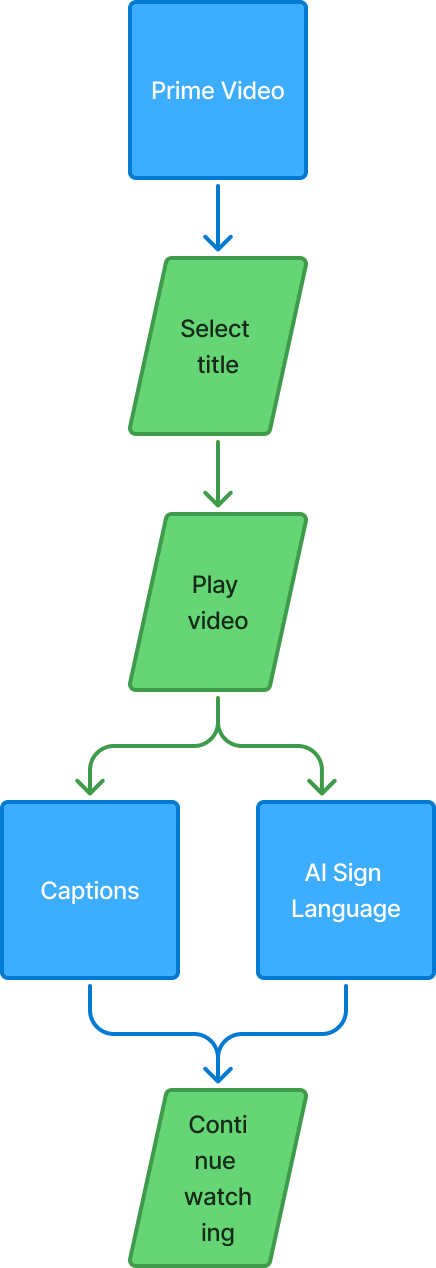
This makes sign-language interpretation part of the normal content experience.
A new accessibility model
Today, accessibility can often depend on whether content has been specifically produced with a particular accessibility feature. The AiSL concept proposes a different model:
Accessibility as an intelligent layer
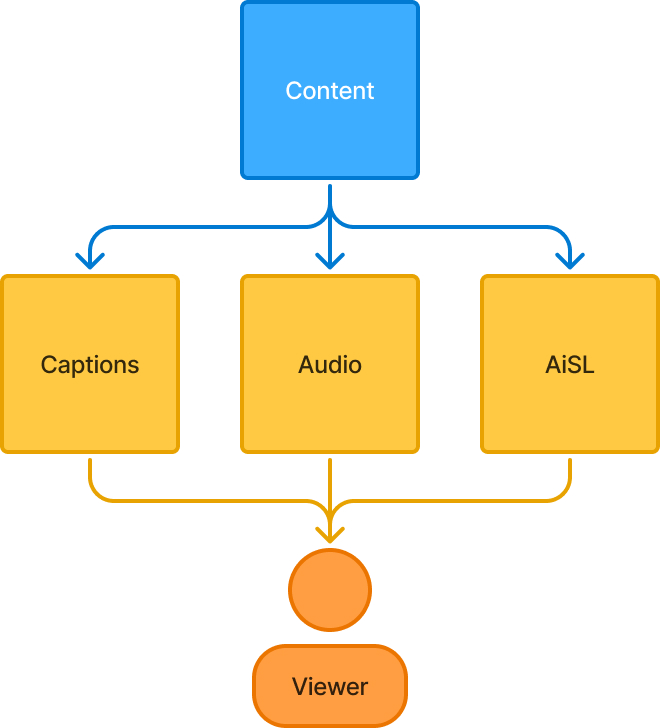
The same content can support multiple ways of experiencing it.
Designing for device flexibility
The experience also needs to work across the Prime Video ecosystem.
The avatar could occupy a dedicated region of the screen or use a configurable overlay.
The avatar could appear alongside the video or as an overlay.
The avatar could occupy a smaller dedicated area while preserving the primary video experience.
The product opportunity
The Prime Video extension could create value across three groups.
- Greater access to entertainment
- More independence
- More content choices
- Consistent accessibility across the catalog
- A scalable approach to accessibility
- Reduced dependency on individually produced interpretations
- Potential to expand accessibility to more titles
- More inclusive products
- Broader content accessibility
- A reusable AI accessibility capability
- Potential application across other video and communication experiences